Tamara Fischer
directing & dramaturgy

Tamara Fischer

directing & dramaturgy

Vertigo

2026
Parfumerie Theater Geneva
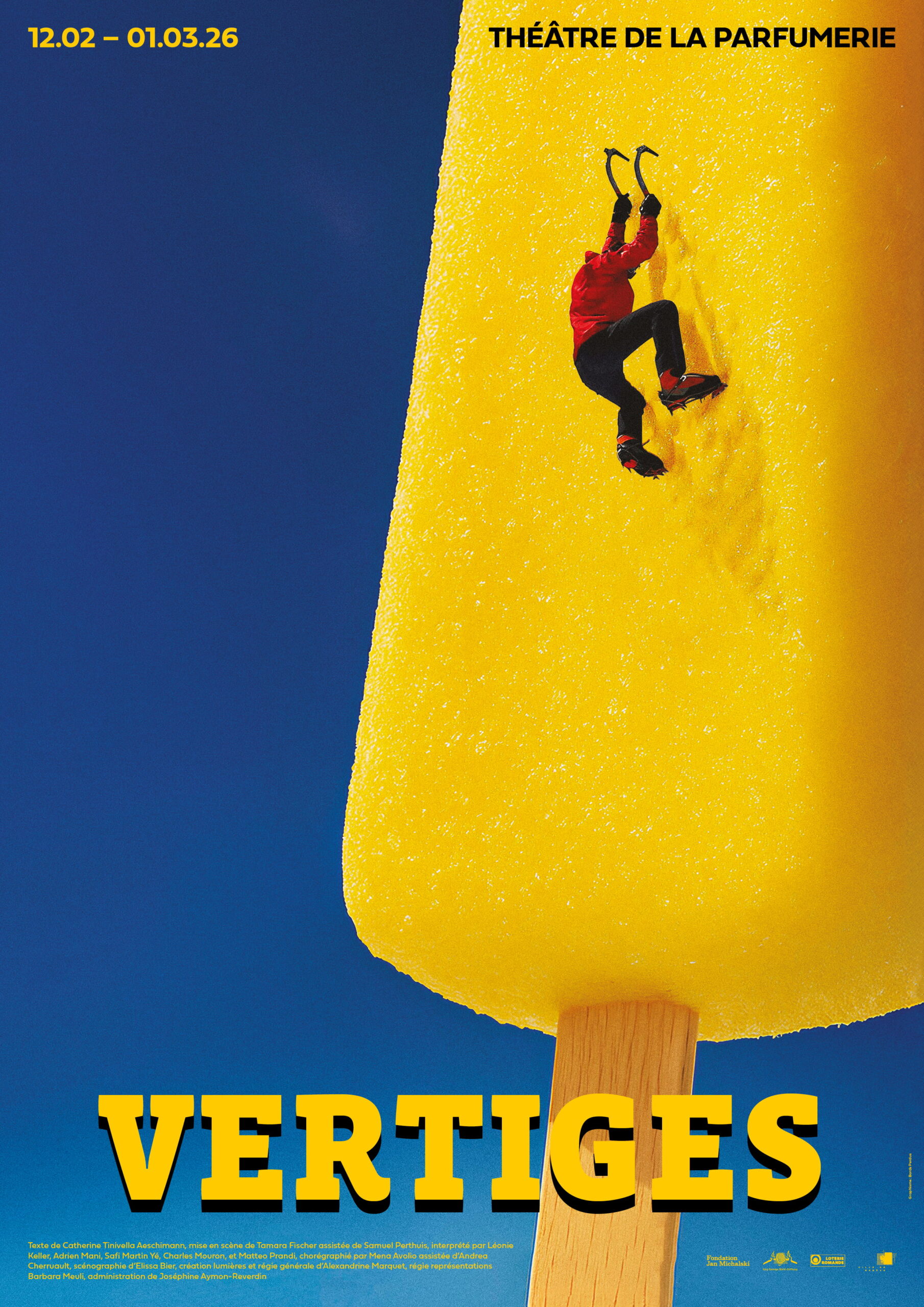
Affiche du spectacle. Ueli Steck escalade un bâtonnet de sorbet citron.

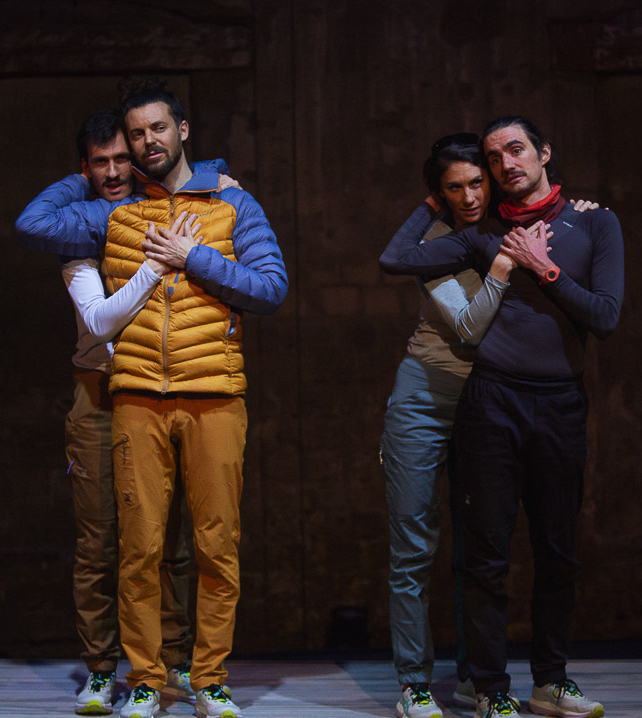
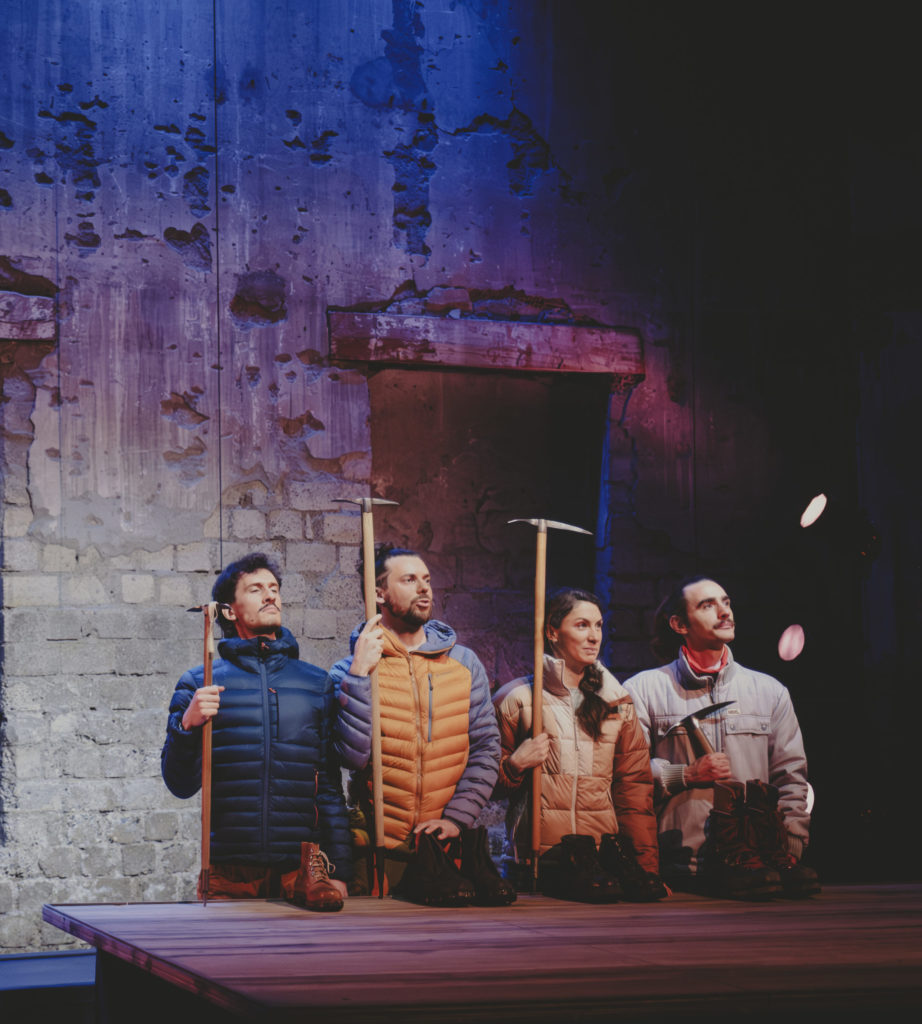
Vertigo takes us to the foot of the legendary north face of the Eiger. Four tourists watch Swiss alpinist Ueli Steck make his astonishing ascent from the terrace of the Hotel Bellevue des Alpes. At once spectators, supporters, voyeurs, and witnesses to an intimate story, they gradually slip into the climber’s mind and body. They imagine his thoughts, feel the fear, the thirst for transcendence, the tension of the perfect gesture. Built as a choral piece for four performers, Vertigo guides us along the winding Heckmair route. Drawing on the legends and ghosts that haunt the Eiger, the performance questions our fascination with achievement, risk, and performance culture.

Artistic team

Text Catherine Tinivella Aeschimann
Direction Tamara Fischer assisted by Samuel Perthuis
With Léonie Keller, Adrien Mani, Charles Mouron & Matteo Prandi
Scenography Elissa Bier
Choreography Mena Avolio assisted by Andrea Cherruault
Lights Alexandrine Marquet
Administration Joséphine Aymon-Reverdin
Musical arrangements & remix Guy Schneider
Regie Barbara Meuli
Costumes Tamara Fischer
Show poster Bords Perdus graphic design
Photographs Sébastien Bovy & Samuel Perthuis
Production Melpomène theater company
Funded by City of Geneva, Romandie Lottery, Jan Michalski Foundation, Alfred & Eugénie Baur Foundation, Anne-Marie Schindler Foundation, SIG Sponsorship Fund, Jürg Georg Bürki Foundation, Swiss Foundation of Interpreting Artists, Commune of Vandoeuvres, Intermittents Fund
Alpine accessories Museum ALPS Bern

Press and links

Tamara Fischer’s direction, combined with the restrained and choral performance of Léonie Keller, Adrien Mani, Charles Mouron, and Matteo Prandi, succeeds in conveying the full essence of Catherine Tinivella Aeschimann’s text. The remarkable performance of the four actors deserves special mention. The text is complex and carried almost entirely through four interwoven voices, with little to no dialogue. The fluidity of the transitions — comparable to those of Ueli Steck himself — is deeply impressive. — Fabien Imhof, the Pépinière, 20.02.26

The further the performers progress along the alpine route, with its cracks and rock pillars, the more physical and choreographic their acting becomes. One of the production’s strongest ideas is the way it embodies the ordeal experienced by Steck’s body through a succession of movements — and dangers — leading toward the summit ridge. Amid falling ice and rocks, the ensemble of actors mentally braves the ascent like a climbing rope team.
— Cécile Dalla Torre, Le Courrier, 16.02.26